

Two Different Worlds, One Shared Bond
If you spent years working alongside a Military Working Dog, you already know what most civilians will never understand. You know the weight of that partnership. You know what it means to trust an animal with your life and to carry responsibility for theirs.
Now you are out. The mission looks different. And the idea of owning a civilian Service Dog is both familiar and completely foreign at the same time.
This transition is real, and it deserves a real conversation. Not a checklist. Not a patronizing rundown of "dog ownership basics." A genuine look at what changes, what stays the same, and how to make the shift well.
What Your Handler Training Already Gives You
Your background is a serious advantage. Most people who apply for or adopt a Service Dog have zero formal training experience with working animals. You have years of it.
Military Working Dog handlers understand operant conditioning at a practical level even if they never called it that. You know how dogs communicate stress, focus, avoidance and engagement. You can read a dog's body language faster than most trainers with a decade of civilian experience.
You also understand discipline in the best sense of the word. Consistent commands. Predictable routines. Clear expectations. Those are the foundations of any well-functioning Service Dog team, and you already live that way.
The mistake some handlers make is assuming their MWD protocols transfer one-to-one into civilian life. They do not. But the instincts behind those protocols, the situational awareness, the calm under pressure, the commitment to the dog's welfare? Those transfer completely.
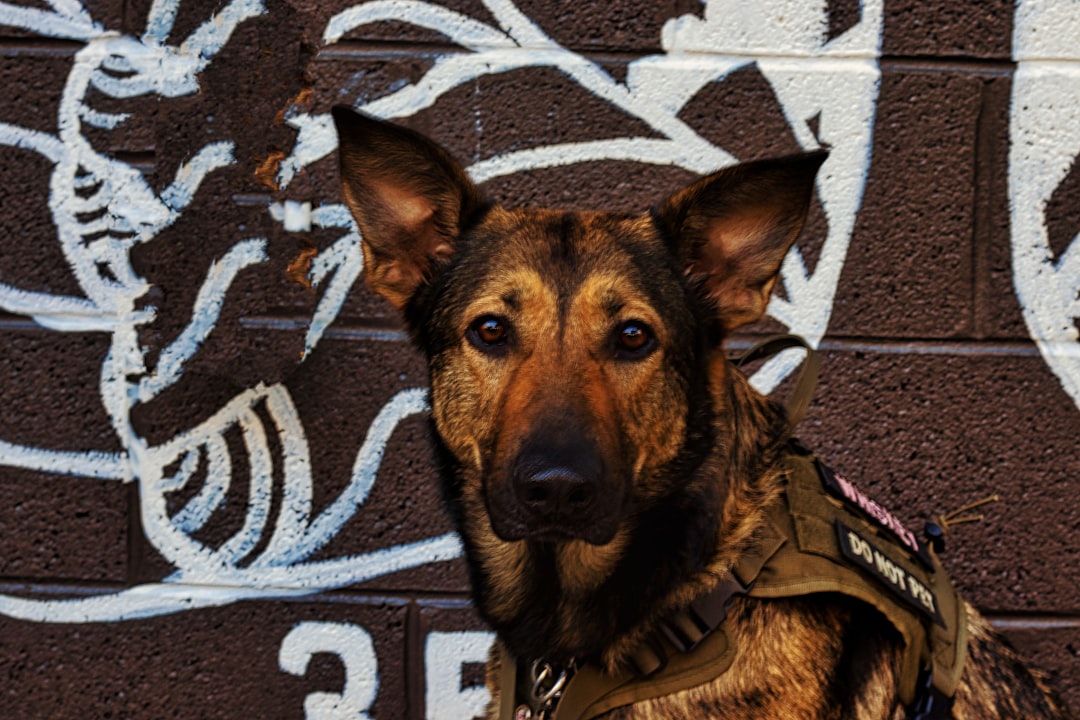
Civilian Rules Are Not Military Protocols
In a military context, everything about your working dog was defined by chain of command, mission requirements and standardized protocols. Your dog had a job, a rank in some sense, and a legal status within military operations.
Civilian life runs on a completely different legal framework. Understanding it is not optional if you want to protect your rights and your dog's access.
The Americans with Disabilities Act
Under the Americans with Disabilities Act (ADA), a Service Dog is defined as a dog trained to perform a specific task directly related to a person's disability. The dog does not need to be certified. There is no national registry. No license plate. No vest requirement. What matters is the task.
Businesses can only ask two questions: Is this a Service Dog required because of a disability? What task has the dog been trained to perform? That is it. They cannot demand documentation. They cannot ask you to demonstrate the task.
Housing Protections Under the Fair Housing Act
The Fair Housing Act provides separate protections for both Service Dogs and Support Animals in housing. Landlords cannot charge pet deposits for a Service Dog. They must make reasonable accommodations. They cannot deny housing based on a dog's breed or size when the animal qualifies under federal law.
Air Travel Rules
The Air Carrier Access Act governs Service Dogs on flights. Airlines now require advance documentation and approval for Service Dogs traveling in the cabin. This changed significantly in recent years. Always contact the airline directly well before travel and review their specific submission process.
None of this is as clean as a military protocol sheet. But knowing the actual legal framework means you can advocate for yourself confidently without getting into unnecessary confrontations.
The Bond Dynamic Shifts When the Dog Is Yours
Here is something that does not get discussed enough. When you were a Military Working Dog handler, the dog belonged to the government. Your relationship was real and profound, but it existed within a structure. The dog had a kennel. You had off-duty hours. There were boundaries built into the system.
A personal Service Dog lives with you. Sleeps near you. Goes everywhere you go. The bond is different in a way that surprises many veteran handlers.
Some handlers find it easier than they expected because the relationship feels more complete. No hand-off at end of shift. No wondering who the dog's primary handler is. The dog orients fully to you.
Some handlers find it harder. The emotional investment is higher. If the dog has a bad day, it is personal in a way it never was when the animal was government property. The stakes feel different.
Give yourself time to adjust to that shift. The bond with a personal Service Dog is not a lesser version of what you had in service. It is a different version. It deserves to develop at its own pace.
Letting the Dog Lead Sometimes
MWD work is handler-directed. You gave commands. The dog executed. A PTSD Service Dog relationship involves more back-and-forth. Your dog may be trained to recognize your physiological stress response before you consciously register it. That means sometimes the dog is doing the alerting and you are doing the following.
For handlers trained to be in control, that can feel uncomfortable at first. It gets easier. And it is one of the most powerful things a Service Dog can offer a veteran.

Recognizing When You Need a PTSD Service Dog
Many veteran handlers come home with PTSD, traumatic brain injury or both. The transition from military to civilian life is already a high-stress period. Add chronic pain, sleep disruption, hypervigilance and isolation, and the need for support becomes urgent.
A PTSD Service Dog is not an emotional support animal. It is a working dog trained to perform specific tasks that mitigate disability. Common tasks include deep pressure therapy during a panic attack, waking a handler from nightmares, room-clearing behavior to reduce hypervigilance, and interrupting dissociative episodes.
If you are experiencing these kinds of symptoms and they are interfering with daily functioning, a Service Dog may be clinically appropriate. The key word is "appropriate." Not every veteran needs a Service Dog. Not every dog is suited to the work. The match has to be right.
Our confidential screening process helps veterans determine whether a Service Dog is clinically indicated and what type of support would be most effective for their specific situation.
VA Programs and Veteran Service Dog Support
The Department of Veterans Affairs has expanded its support for veteran Service Dog teams significantly. As of 2026, VA benefits for Service Dogs can include veterinary care through the VA Prosthetics and Sensory Aids Service, equipment like harnesses and identification gear, and training support in some cases.
The VA's Service Dog Benefits program applies to dogs that assist veterans with physical disabilities including visual, hearing and mobility impairments. PTSD Service Dogs fall into a separate and still-evolving area of VA support. Coverage and eligibility depend on individual circumstances, VA facility policies and current program guidelines.
To access these benefits, connect with your VA primary care provider or a VA social worker. Ask specifically about the Prosthetics and Sensory Aids Service and get a referral in writing. Navigating VA bureaucracy is its own skill set, and you already have the patience for it.
Veterans Service Organizations like the Disabled American Veterans and Wounded Warrior Project also have resources and advocates who can help you navigate VA program access. Use those networks. That is what they exist for.
Nonprofit and Grant-Funded Service Dog Programs
Several nonprofits provide trained Service Dogs to veterans at no cost or reduced cost. Wait times can be long, often one to three years. Programs vary significantly in training quality, placement standards and post-placement support.
When evaluating a program, ask about their training methodology, how they assess handler-dog compatibility, what post-placement training they provide and what happens if the placement does not work out. A reputable program will welcome those questions. One that does not is a warning sign.
Getting Started as a Civilian Service Dog Owner
Whether you are acquiring a trained Service Dog through a program or owner-training one yourself, the path forward starts with a clear clinical picture. You need documentation of your disability from a licensed healthcare provider. This is not optional. It is the foundation for accessing housing accommodations, VA benefits and other support.
As a 501(c)(3) nonprofit healthcare provider, TheraPetic® Healthcare Provider Group connects veterans with Licensed Clinical Doctors who understand veteran-specific mental health conditions. Our clinical team has deep experience evaluating PTSD, TBI and related conditions in veteran populations.
If you are considering owner-training your Service Dog, your MWD handler background is genuinely valuable here. You understand training timelines, setbacks and the difference between a dog that is ready and one that is not. That judgment matters.
Owner-training is legal under the ADA. There is no federal requirement to use a professional trainer or a program. What matters is that the dog reliably performs the trained task and is under control in public settings at all times.
A few practical steps to take right now:
- Schedule an evaluation with your VA provider or a civilian mental health professional to document your disability
- Research Service Dog programs with strong veteran placement records
- Review the ADA, Fair Housing Act and current Air Carrier Access Act guidelines directly from ADA.gov so your knowledge comes from primary sources
- Connect with veteran Service Dog handler communities online where real-world experience is shared freely
You can also explore veteran Service Dog program resources on our site to understand what options are available and how to evaluate them.
You Are Not Navigating This Alone
The transition from Military Working Dog handler to civilian Service Dog owner is not just a paperwork change. It is a shift in identity, in purpose and in relationship. You carried an enormous amount of responsibility in uniform. Some of that weight does not leave when the uniform does.
A Service Dog does not fix that. But for many veterans, it provides something that is genuinely hard to find in civilian life: a partner who is fully present, non-judgmental and oriented entirely toward your wellbeing.
That is worth pursuing carefully and honestly.
TheraPetic® Healthcare Provider Group works with veterans across the country to provide clinical evaluations, documentation support and guidance through the Service Dog process. Our Licensed Clinical Doctors are experienced in veteran-specific mental health needs and understand the unique dynamics of transitioning from military service.
If you are ready to explore whether a Service Dog is right for your situation, start with our confidential intake process or reach out directly at help@mypsd.org or (800) 851-4390. There is no pressure and no obligation. Just honest information from people who take this work seriously.
Written By
Ryan Gaughan, BA, CSDT #6202 — Executive Director
TheraPetic® Healthcare Provider Group • About • LinkedIn • ryanjgaughan.com
Clinically Reviewed By
Dr. Patrick Fisher, PhD, NCC — Founder & Clinical Director • The Service Animal Expert™
Editorial Review
This article was reviewed by Dr. Patrick Fisher, PhD, NCC on September 5, 2026 for accuracy, currency, and clarity. Content is updated when laws or guidance change.