

Not All Service Dog Programs Are the Same
If you have spent any time researching veteran service dog training, you have probably noticed something. Most of what comes up is written for a general audience. Generic timelines, standard obedience milestones, broad descriptions of what a psychiatric service dog can do. That information is not wrong. It just is not written for you.
Veteran-focused service dog training programs are built differently. The mission, the methods, the staff, the peer community, and the long-term support structure all reflect the specific reality of life after military service. Understanding how these programs differ is the first step in finding one that will actually work for you.
What Trauma-Informed Training Actually Means
The phrase gets used a lot. But trauma-informed training is not just a label. It describes a specific approach to how dogs are trained, how handlers are taught, and how the entire program is structured.
In a standard program, training is built around task acquisition. The dog learns a skill. The handler learns to cue it. The focus is functionality. That is fine for many people. It is not always fine for veterans managing PTSD, traumatic brain injury, or moral injury.
A trauma-informed program starts by acknowledging that the handler's nervous system is part of the equation. Veteran handlers often have hypervigilance, startle responses, avoidance patterns, and emotional dysregulation that standard programs do not account for. Veteran-focused programs build the training schedule, the environment, and the handler coaching around these realities from day one.
For example, training sessions in veteran-specific programs are often shorter and paced to match the handler's window of tolerance, not a standardized curriculum clock. Instructors are trained to recognize when a handler is shutting down or escalating and know how to adjust without making the veteran feel singled out or broken. That kind of attunement is rare in general programs and it makes a measurable difference in whether veterans complete training and successfully integrate their dogs into daily life.
Trauma-informed training also shapes how tasks are selected and taught. A dog trained to interrupt nightmares requires a very different conditioning process than a dog trained to retrieve objects. Veteran programs understand this and build those interruption and grounding tasks into the core curriculum rather than treating them as optional add-ons.
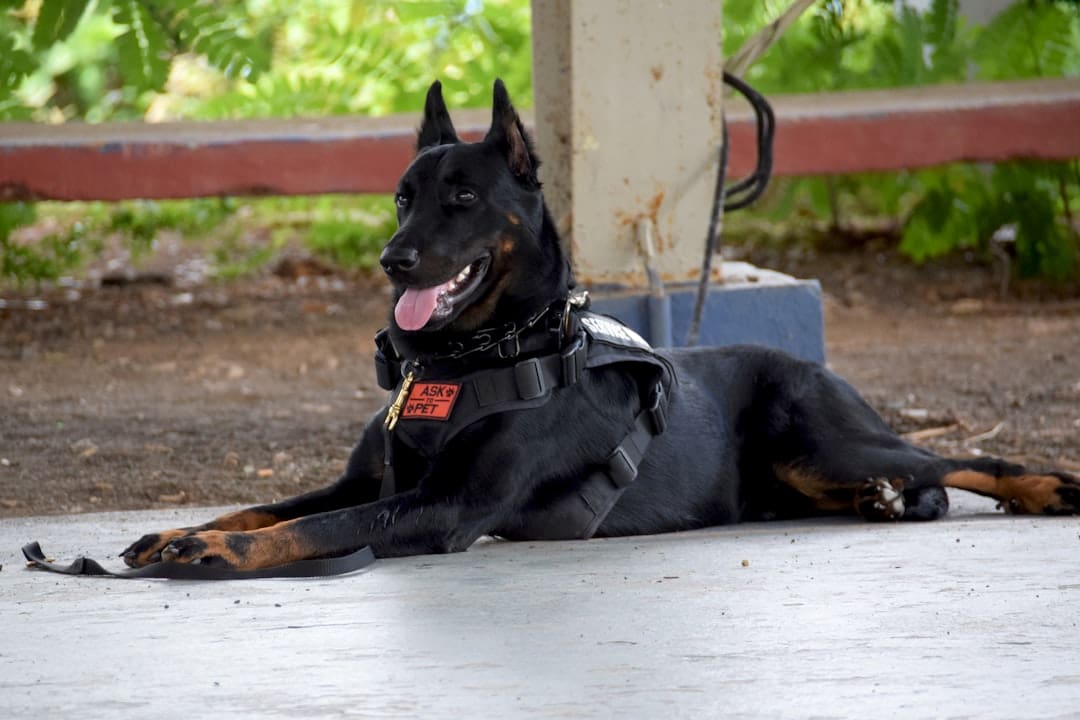
Task Work Built Around Combat and MST-Related Symptoms
The tasks a veteran service dog needs to perform are specific. They are not the same tasks a person with a panic disorder acquired from a car accident needs. Veteran programs know the difference.
Combat veterans and survivors of military sexual trauma present with symptom clusters that require targeted task training. Hypervigilance in public spaces. Nightmare interruption during sleep. Cover and watch behavior that allows the handler to sit with their back to a room. Crowd buffering that creates physical space. Deep pressure therapy during flashback episodes. Grounding cues that interrupt dissociation.
General programs may offer some of these tasks. Veteran-specific programs build their entire task menu around them. They also understand the context in which veterans use these tasks. A grocery store is not just a grocery store. A crowded restaurant can trigger the same physiological response as a hostile environment. Veteran programs train for real-world civilian situations that carry military-pattern triggers, because their instructors have either lived that experience or have extensive clinical training with veteran populations.
The distinction matters because a dog trained with civilian trigger profiles will not be prepared for what a veteran actually encounters day to day. Task specificity is where veteran programs earn their place.
Family Integration Is Part of the Training
One of the most overlooked elements of veteran service dog programs is what happens with the family. PTSD does not live in a vacuum. It lives in the home, at the dinner table, in the bedroom, and in every relationship the veteran has. Veteran-specific programs understand this.
General programs train the handler. Veteran programs often train the whole household. Spouses, partners, children, and parents are brought into at least part of the training process so they understand what the dog does, why the dog does it, and how to support the partnership without interfering with it.
This is not a small thing. Without family education, a well-trained service dog can become a source of household conflict. A spouse who does not understand why the dog sleeps in the bed, or why the veteran needs the dog present during a panic episode, may inadvertently undermine the partnership. Veteran programs address this proactively.
Family integration sessions also give household members a place to voice their own experiences. Military families carry secondary trauma. Veteran programs that acknowledge this, and include family members as part of the healing process, create stronger outcomes for everyone. Some programs include family members in group sessions or connect them with peer support from other military families who have gone through the same process.
If you are evaluating a program and they have no component that involves your household, that is worth noting. It is a signal that the program was not built with veteran family dynamics in mind.

Peer Mentoring and the Role of Veteran Handlers
Military culture is built on the principle that you learn from people who have been there. That principle carries directly into veteran service dog programs that are doing this well.
Peer mentoring in veteran-specific programs pairs incoming handlers with veterans who have already completed training and are successfully partnered with their service dogs. This is not just motivational. It is functional. A veteran who has worked through the adjustment period of bonding with a service dog can offer guidance that no instructor, however skilled, can fully replicate.
The peer mentor can talk honestly about the hard parts. The weeks when the dog felt like one more responsibility instead of a relief. The social friction of taking a service dog into spaces where people ask questions. The learning curve of navigating public access rights. These conversations happen between veterans in a way that does not require either party to explain the baseline. The shared context is already there.
Peer mentoring also reduces isolation during the training period, which can be one of the most difficult stretches for veteran handlers. The structure of military life is gone. The unit is gone. The training process for a service dog, while meaningful, can feel solitary without a peer community around it. Programs that build mentoring into their model address that gap directly.
Look for programs where peer mentors are formal participants in the program structure, not just informal connections. When peer mentoring has a clear role, it signals that the program was designed with veteran culture in mind, not bolted onto a civilian framework as an afterthought.
Post-Placement Support That Stays With You
The end of a training program is not the end of the partnership. It is the beginning. Veteran-focused programs recognize this and build post-placement support into their model as a core feature, not an optional upgrade.
Post-placement support in strong veteran programs includes regular check-ins after the dog goes home. These may be monthly calls, in-person visits, or access to an online community of handlers who have gone through the same program. Some programs assign a case manager or a veteran peer who stays connected through the first year of placement, which is statistically the most challenging period for new handler teams.
What does this support actually address? Relationship challenges between the dog and other household pets. Public access conflicts and how to handle them legally under the Americans with Disabilities Act. Symptom changes that require retraining certain tasks. Handler burnout, which is real and rarely discussed. Situations where the partnership is not working as expected and needs professional reassessment.
General programs often provide a training completion certificate and a follow-up contact number. Veteran programs that are built for this population offer something closer to ongoing case management. That difference in post-placement infrastructure is one of the clearest ways to distinguish a program that understands veteran needs from one that does not.
The U.S. Department of Veterans Affairs acknowledges the growing role of service dogs in veteran mental health care and has expanded resources for veterans navigating this process. Knowing how your program interfaces with VA resources, including whether they can support your VA treatment team, is a practical question worth asking before you enroll.
How to Choose the Right Program for You
Choosing a veteran service dog training program is one of the most significant decisions in this process. The wrong fit can set a veteran back significantly. The right fit can change the trajectory of recovery.
Start by asking specific questions. Does the program have instructors with clinical training in trauma? Not just dog training certifications. Actual training in how trauma affects learning and behavior in human beings. Does the program include family members in any structured way? What does post-placement support look like for the first twelve months? Is there a peer mentor component? What is the program's completion rate, and what happens if a placement does not work?
Programs should be able to answer these questions clearly. Vague answers are information. They tell you the program has not thought deeply about veteran-specific needs.
You can also explore the eligibility and screening process for a psychiatric service dog through our screening process, which walks through the clinical and documentation steps veterans need to understand before approaching any training program. Having your documentation in order before you apply to a program puts you in a stronger position from the start.
Branch of service, era of service, and specific diagnosis all matter when matching with a program. A program that has worked extensively with post-9/11 combat veterans may have less experience with Gulf War veterans or Vietnam-era veterans who present with different symptom profiles and different relationships to treatment. Ask specifically about their experience with your situation.
Next Steps for Veterans Ready to Move Forward
If you are a veteran who has decided that a veteran service dog is the right next step, the most important thing you can do right now is get informed before you commit to anything. Programs vary enormously in quality, cost, wait times and philosophy. A waiting list of two years at one program does not mean you have to wait two years to move forward. It means you need a complete picture of your options.
Understanding your rights under the Americans with Disabilities Act and the Fair Housing Act will also serve you well before and after placement. Knowing what your dog is legally permitted to do, and where, protects both you and the partnership you are building. You can read more about veteran service dog rights on our site to get grounded in the legal framework before your placement.
As a 501(c)(3) nonprofit healthcare provider, TheraPetic® Healthcare Provider Group is committed to making sure veterans have access to accurate, clinically grounded information about psychiatric service dogs and support animals. Our Licensed Clinical Doctors work directly with veterans and understand the specific intersection of military trauma, civilian reintegration, and the therapeutic role a service dog can play. If you have questions or want to talk through your situation, reach out to our team at help@mypsd.org or call (800) 851-4390.
The right program exists for you. Knowing what to look for is how you find it. Start your journey by beginning your screening today and connecting with clinical support that understands what you have been through.
Written By
Ryan Gaughan, BA, CSDT #6202 — Executive Director
TheraPetic® Healthcare Provider Group • About • LinkedIn • ryanjgaughan.com
Clinically Reviewed By
Dr. Patrick Fisher, PhD, NCC — Founder & Clinical Director • The Service Animal Expert™
Editorial Review
This article was reviewed by Dr. Patrick Fisher, PhD, NCC on August 1, 2026 for accuracy, currency, and clarity. Content is updated when laws or guidance change.